
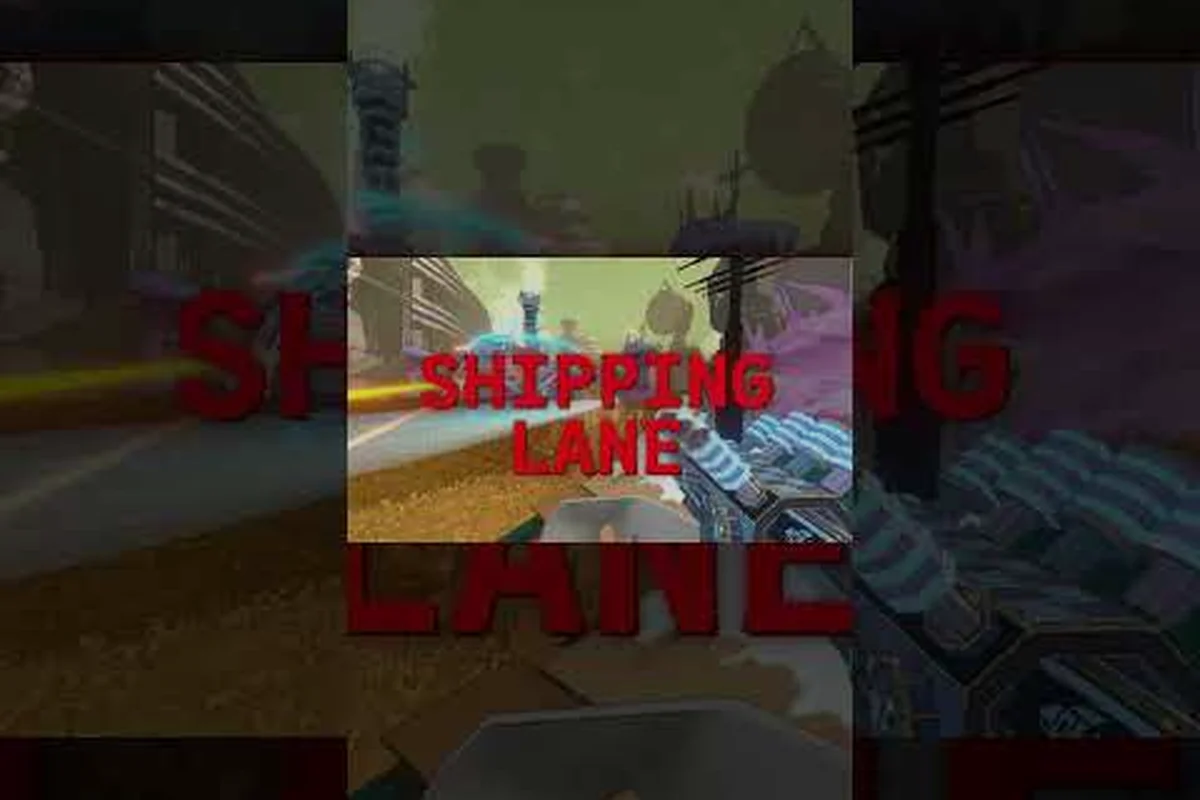
The Mycopunk Oxythane Breach update landed as part of the 1.9.5 Escalation patch just before the studio pivoted into its 1.0 launch window, and the patch is still the reference point for how Oxythane Breach missions behave today. If you have been wondering why the mission now shows up in mission select on completion, what the DMLR / Plate Launcher fixes actually do, or how to step onto the beta branch to test the next round of changes, this is the breakdown worth bookmarking. If you have been wondering why the mission now shows up in mission select on completion, what the DMLR / Plate Launcher fixes actually do, or how to step onto the beta branch to test the next round of changes, this is the breakdown worth bookmarking, alongside the Oxythane Breach mission timing details covered in our Mycopunk Oxythane Breach update.
What the 1.9.5 Patch Actually Changed
The 1.9.5 announcement on Steam is short, but the changes are concrete: the Oxythane Breach Escalation variant is now persistent in mission select after you clear it, voice chat behavior with push-to-talk was tightened, and two long-standing combat bugs were corrected. Pigeons at Play, the studio behind Mycopunk, has historically shipped these mid-cycle Escalation patches between bigger content drops, and 1.9.5 fits that rhythm because it bridges the World Update era into the 1.0 push that was teased in the studio's roadmap post.
Oxythane Breach Escalation Now Shows in Mission Select
The headline change is mission flow. After completing an Oxythane Breach run, the Escalation variant now appears directly in the mission select screen rather than being hidden until the next rotation. The Escalation appears in the Gravity Farm region when it does surface, which lines up with how the map shipping lane is set up in the HUB fast-travel list. For a squad that already knows the standard Oxythane Breach loop, Escalation is the harder reroll that adds a new modifier stack on top of the existing mission seed.
The practical effect is that players no longer need to clear a base run, exit to orbit, and re-enter the HUB to chain the harder version. The mission entry is now a single click, which matters when the Escalation modifier is the only thing standing between your squad and the Antimass payout you actually want.
Voice Chat Typing Fix
A second change in 1.9.5 touches the co-op layer. Voice chat is now disabled while typing in text chat if push-to-talk is enabled. The previous behavior would cut voice the moment a key was pressed, even if push-to-talk was the active mic mode. The fix means push-to-talk users keep their mic hot until they actually hold the activation key, and only lose it while a text chat field has focus. For four-player co-op squads that rely on callouts during Amalgamation timers, this is a meaningful quality-of-life adjustment that is easy to miss if you only ever run solo.
DMLR Lightning Strike Bug
The third change is a combat fix. Before 1.9.5, equipping both Arc Lightning and Concussive Blast on the DMLR could cause the weapon to spawn a burst of simultaneous lightning strikes in a single frame, which over-procced shock effects and trivialized the targets caught in the overlap. The patch prevents that simultaneous burst, so the two upgrades now stack on their own individual cooldowns rather than firing as one combined payload.
This is the kind of fix that is invisible to most players but obvious to anyone running a shock-focused DMLR build, because the weapon stops deleting crowds the moment the second upgrade is equipped. The DMLR remains a strong mid-range pick, but the ceiling of the Arc Lightning plus Concussive Blast combo has been pulled back to a more reasonable level.
Plate Launcher Acid Puddle Fix
The fourth 1.9.5 fix targets the Plate Launcher interaction with Vector Interdiction. Previously, Vector Interdiction could start spawning acid puddles on a plate that had already been fired, even though the plate was no longer live. The result was leftover acid ground effects that the squad had no clean way to clear, which dragged out fights and polluted cover positions. The patch prevents the trigger condition, so the puddles only spawn on plates while they are still in play.
| Change | Target | Effect |
|---|---|---|
| Escalation in mission select | Oxythane Breach | Replayable from the select screen after first clear |
| Voice chat typing fix | Push-to-talk users | Mic stays live while typing in text chat |
| DMLR lightning burst | Arc Lightning + Concussive Blast | Simultaneous spawn removed; upgrades now cooldown independently |
| Plate Launcher acid puddles | Vector Interdiction | Puddles only spawn on active plates |
How the Patch Fits Into the Broader Update Timeline
The 1.9.5 Escalation patch is not a standalone event. It sits between Update 1.8.3, which cleaned up procedural level flow from the World Update, and the Roadmap to 1.0 post that the studio used to outline the path out of Early Access. Looking at the Steam news hub archive in order, the studio's release cadence in 2026 has been World Update, 1.8.3 follow-up, Oxythane Breach 1.9.5, then a deliberate slowdown into 1.0 preparation. Each patch has been small and focused, and 1.9.5 is the most surgical of the bunch.
1.8.3 Procedural Cleanup
The 1.8.3 announcement, posted in May 2026, was a short follow-up that fixed mission flow and procedural generation edge cases introduced by the World Update. The procedural overhaul had added variant regions like the Sunken Highlands under the Moldy Tundra and City Outskirts under the Titan City map, and 1.8.3 was the patch that smoothed out the cases where mission chains could softlock or terminate early. If you load a save from before 1.8.3, you are not forced into a clean save, but mission progress from the World Update era can be inconsistent on older saves.
Roadmap to 1.0
The Roadmap to 1.0 post followed in July 2026 and was deliberately noncommittal about a fixed launch date. The studio recapped that since Early Access began they had overhauled the UI, added the Ouroboros roguelike mode alongside the Ice Floes map, introduced new weapons and a new grenade, dropped procedural levels, and redesigned enemies. The post framed 1.0 as a single large update rather than another mid-cycle patch, and it explicitly avoided a release commitment.
Why 1.9.5 Matters in Context
Seen through that lens, 1.9.5 is the last surgical patch before the studio shifted attention to the 1.0 release on 2026-10-20. The Escalation persistence change is the most "content-shaped" fix in the bundle, while the DMLR and Plate Launcher fixes are balancing work that arguably should have shipped before the 1.0 marketing push. For a player catching up, the practical takeaway is that 1.9.5 is when Oxythane Breach stopped being a one-and-done mission and became a repeatable Escalation farm in mission select.
Steam Charts and Player Count Around 1.9.5 and 1.0
The 1.0 launch on 2026-10-20 was the first day the game left Early Access after roughly fifteen months. Steam Charts, the public-facing player count tracker, registered approximately 1,839 concurrent players on the snapshot date, which is a strong opening day for a 14.99 USD title with a 50% launch discount running through 2026-11-03. For context, the Early Access era was spikier: the World Update pulled a short burst, and Ouroboros drew a smaller crowd that dissipated once players had cleared the thirteen-room Blitz variant.
| Window | Approx. Peak Concurrent | Driver |
|---|---|---|
| Early Access baseline (2025-07 to early 2026) | Low hundreds | Core EA audience |
| World Update spike (early 2026) | Modest bump | Procedural overhaul |
| Ouroboros launch | Mid hundreds | Roguelike mode release |
| 1.9.5 / 1.0 launch week | ~1,839 (snapshot) | 1.0 release + launch discount |
The Steam Charts peak is best read alongside the review snapshot: 4,825 reviews with 4,261 positive ratings, putting the game in Very Positive territory. A Very Positive review score on a co-op looter shooter that has been in Early Access for over a year is a healthier signal than the player count alone suggests, because the audience that stuck around through EA tends to vote more reliably than the launch spike crowd. Players who bounced early often never leave a review, so the 88% positive ratio is weighted toward people who actually played through multiple updates.
The 1.0 launch also marked the first time Mycopunk was simultaneously available on PC and PlayStation 5. The simultaneous launch was confirmed via the official PlayStation channel and the Devolver Digital trailer, and it explains part of the 1.0 chart bump because PS5 players running the same backend are not counted in the Steam Charts peak. If you only watch Steam Charts, the launch day number understates the actual player base by the size of the console population.
Modding Update and Beta Branch Access
Modding support in Mycopunk has never been positioned as a Bethesda-scale framework, and the studio has not published a full modding SDK the way some larger live-service shooters have. What the studio has done is open the beta branch on Steam and publish incremental modding-adjacent resources through the official Mycopunk website and the news hub. The beta branch is the practical channel for testing new content, and 1.9.5 was the last major change set that landed in mainline before the 1.0 era started rolling out the door.
What the Beta Branch Actually Is
The beta branch is a separate Steam depot that you opt into from the game's Properties window. It is the same build pipeline the studio uses internally, which means it is sometimes stable, sometimes rough, and always subject to wipes or reset state. Pigeons at Play uses the beta branch to test mission flow changes, enemy tuning, and weapon balance adjustments before they hit the main branch. There is no schedule for when a beta build gets promoted, and the studio does not publish a public changelog in the beta branch itself.
How to Join the Beta Branch
To opt in, right-click Mycopunk in your Steam library, choose Properties, open the Betas tab, and enter the access code from the studio's beta announcement when one is active. When no code is required, the drop-down simply lets you select the beta branch directly. The studio has occasionally gated beta access behind a code posted on Discord or in a Steam announcement, so it is worth checking the news hub before you try to switch. To opt back out, return to the same tab and select the default branch.
Modding Resources Available Now
Because the game launched 1.0 only one day before this guide was written, the third-party modding scene is essentially nonexistent. There is no central mod hub, no Steam Workshop integration, and no formal mod SDK shipped with the release. The developer has confirmed preliminary mod support for adding custom upgrades and sandbox mods, and modded lobbies show their server-side mods, so that in-game support is the current path for players who want to extend the game.
| Channel | Type | Status |
|---|---|---|
| Steam beta branch | Opt-in build | Active, gated occasionally by code |
| Steam Workshop | First-party mod hosting | Not yet shipped |
| Official modding SDK | Developer tools | Not yet published |
| Community mod hub | Third-party | Effectively empty as of 1.0 launch |
System Requirements and Hardware Targets
Mycopunk's system requirements are modest, which is consistent with the studio's mission-based co-op design and stylized art direction. Because there is no third-party wiki or community spec sheet to cite yet, the requirements listed here are the publicly stated minimums and the practical recommendations that the community has reported on the Steam discussion boards and in the official Discord since Early Access. If you are on older hardware and want a smoother experience, the Steam Deck verified settings thread on the community forums is a useful reference for what the game expects.
Minimum Specs and the 60 FPS Floor
The minimum target is a 64-bit Windows 10 install, a quad-core CPU, 8 GB of RAM, and a GPU in the GeForce GTX 1050 / Radeon RX 560 class. That spec gets you into the game at low settings, and the developers have framed 60 FPS as the target floor for co-op combat because the Amalgamation timer and the Abruption encounter windows are tuned around a smooth frame rate. If you drop under 60 FPS in a four-player squad, the callout timing in the HUB chat and the Amalgamation fuse window both become harder to read.
Recommended Specs and Co-op Stability
The recommended spec, drawn from the Steam store page and Early Access community testing, is a six-core CPU, 16 GB of RAM, and a GPU in the GeForce GTX 1660 Super / Radeon RX 5600 class. That target holds a stable 60 FPS in four-player co-op on Epic settings and survives the worst-case scenario where three squadmates are all firing elemental upgrades into a packed spawn wave. For a 4-player co-op shooter, the GPU is rarely the bottleneck once you pass the 1660 class; the CPU matters more because mission scripts, enemy AI, and procedural room generation all run on the main thread.
Steam Deck and PlayStation 5
On Steam Deck, the game runs at the device's native 1280x800 resolution with a mix of medium and low settings, and the developer has tuned the Steam Deck preset in the graphics menu for that target. On PlayStation 5, the game runs at a 4K target with performance and quality modes selectable from the system menu. Cross-progression between Steam and PS5 is not part of the 1.0 feature set, so save data is platform-locked at launch.
| Spec Tier | CPU | RAM | GPU | Target |
|---|---|---|---|---|
| Minimum | Quad-core | 8 GB | GTX 1050 / RX 560 | 60 FPS at low |
| Recommended | Six-core | 16 GB | GTX 1660 Super / RX 5600 | 60 FPS at Epic in co-op |
| Steam Deck preset | Zen 2 APU | 16 GB | RDNA 2 integrated | 60 FPS at 1280x800 |
| PlayStation 5 | AMD Zen 2 | 16 GB | RDNA 2 | 4K with quality / performance modes |
Practical Takeaways From the 1.9.5 Patch
For a returning player, the 1.9.5 patch is the inflection point where Oxythane Breach becomes a proper farm target rather than a one-shot mission. For a new player joining at 1.0, the patch is the foundation that the 1.0 launch was built on, and you will feel the 1.9.5 changes the moment you start running Escalation variants. Below are the three practical things worth doing this week if you are catching up.
Run Oxythane Breach Escalation for Antimass
The first takeaway is to run Oxythane Breach on Escalation as soon as you unlock the mission. The Antimass payout scales with threat level, and Escalation modifiers stack on top of the base mission seed, which means each clear is a denser reward pull than a standard run. Antimass feeds the Pattern Infusion system in the HUB, and Infusion is the only way to push a weapon's grade past the standard Rare band. If you are behind on Pattern Infusion, the 1.9.5 Escalation persistence change is the friendliest time the studio has ever made the farm.
Test the Beta Branch Before the Next Major Update
The second takeaway is to opt into the beta branch before the next major patch. Beta builds reset mission progress inconsistently, so you should not opt in mid-progression, but they are the only way to see the next round of balance changes and mission flow adjustments before they hit the main branch. If you are a player who likes to plan builds around upcoming weapon tuning, the beta branch is where you read the patch before everyone else.
Watch Steam Charts for the Launch Discount Window
The third takeaway is that the launch discount runs through 2026-11-03. If you are still on the fence, the 50% off price of 7.49 USD versus the 14.99 USD list is the cheapest the game will be for the foreseeable future, and the 1.0 launch window is the only confirmed period where the discount is live. Steam Charts tend to drift back toward the Early Access baseline once the discount window closes, so the next two weeks are the densest period for public lobbies if you want a populated HUB.
| Action | When | Why |
|---|---|---|
| Run Oxythane Breach Escalation | This week | Antimass payout for Pattern Infusion |
| Opt into the beta branch | Between missions | Early access to the next balance pass |
| Buy during launch discount | Before 2026-11-03 | 50% off versus the 14.99 USD list |
| Track Steam Charts | Weekly | Gauge public-lobby activity |
Frequently Asked Questions
What does the Mycopunk Oxythane Breach update actually change?
The 1.9.5 Escalation patch makes the Oxythane Breach Escalation variant appear in the mission select screen after the first clear, fixes a voice chat bug for push-to-talk users, removes the simultaneous lightning burst when both Arc Lightning and Concussive Blast are equipped on the DMLR, and stops the Plate Launcher from leaving acid puddles on already-fired plates when paired with Vector Interdiction. The full list of changes is published in the official 1.9.5 announcement.
What is the current Mycopunk review score on Steam?
The current review snapshot lists 4,825 reviews with 4,261 positive ratings, which puts Mycopunk in the Very Positive band. The ratio is healthier than the player count alone suggests because Early Access players tend to vote more reliably than the launch spike crowd, and the 1.0 release has not yet shifted the percentage meaningfully at the snapshot date.
What are the Mycopunk system requirements?
The minimum spec is a 64-bit Windows 10 install, a quad-core CPU, 8 GB of RAM, and a GTX 1050 / RX 560 class GPU, which targets 60 FPS at low settings. The recommended spec for stable co-op is a six-core CPU, 16 GB of RAM, and a GTX 1660 Super / RX 5600 class GPU, which holds 60 FPS at Epic in four-player squads. Steam Deck has a verified preset that runs the game at 1280x800 with mixed medium and low settings.
How do I join the Mycopunk beta branch on Steam?
Right-click Mycopunk in your Steam library, open Properties, switch to the Betas tab, and select the beta branch from the drop-down, or enter the access code from the studio's beta announcement if one is required. The studio occasionally gates beta access behind a code posted on the official Discord or in a Steam announcement, so check the news hub before switching. To return to the main branch, select the default option in the same tab.
Is there a modding update for Mycopunk?
There is no Steam Workshop integration and no formal mod SDK shipped as of the 1.0 launch, and the third-party modding scene is effectively empty because the game only left Early Access on 2026-10-20. The developer has implemented preliminary mod support for adding custom upgrades and sandbox mods, and modded lobbies list their server-side mods, so that is the current sanctioned route.